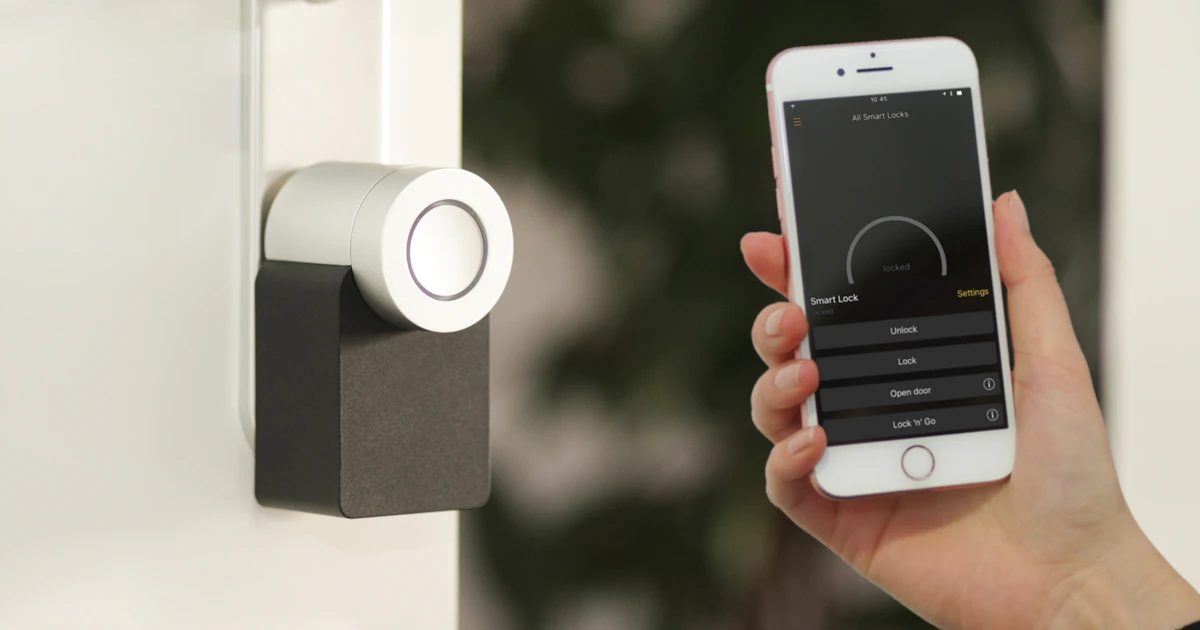
Picture guests arriving at 23:00 while you are asleep. Or running several apartments at once on the other side of town. The traditional approach, handing over keys in person, then becomes a logistical problem. Fortunately there is a simpler answer: automatic check-in with a keypad lock or an app.
Why automatic check-in is the future of short-term rental
Guests increasingly expect flexibility. A large share of travellers prefer to check themselves in, especially on late arrivals. And automatic check-in benefits not only the guest but, above all, the owner.
- No need to be physically present. You can manage the apartment remotely.
- Several properties at once, without the stress of overlapping arrivals.
- A professional impression. The guest gets the code in advance and everything works.
- Delays stop being a crisis. Train running late? No problem, the code is waiting.
Types of lock for automatic check-in
1. Keypad (code) locks
The most popular choice among apartment owners. They run on batteries and need no internet connection to open. The code can be changed before every stay, by hand or automatically through an app. Cost: PLN 200 to 600 per unit.
The best-known brands are Yale, Danalock and Philips Smart Lock. When choosing, look at:
- Battery life (at least 6 to 12 months in normal use)
- Whether it can integrate with your booking management system
- A weather resistance rating (if this is an external door)
- Emergency opening with a mechanical key, essential as a backup
2. WiFi and Bluetooth locks with an app
More expensive (PLN 400 to 1,200), but they offer more: remote code changes, entry history, real-time notifications. You can see exactly when a guest entered and left, which helps when settling stay times or checking whether the cleaning team has finished.
3. Key boxes
The cheapest option (PLN 50 to 150), a metal box with a code, mounted by the door or near the building. It works well as a backup or a first step without much investment. The drawback is that the code does not change automatically between guests, so it needs handling by hand after every checkout.
Setting up automatic check-in step by step
- Choose a lock. To start with, a mid-range keypad lock that allows remote code changes through a mobile app.
- Decide how codes are generated. Ideally a unique 4 to 6 digit code for every stay, changed automatically after checkout.
- Write instructions for guests. Keep them simple, with photos, sent around 24 hours before arrival.
- Test the whole thing. Ask someone close to you to walk through the process from the guest's point of view.
- Connect it to your booking system. Platforms such as erphome.pl can send codes automatically once a booking is confirmed.
What to put in the message with the code
Good check-in instructions should contain:
- The exact address with a Google Maps link
- How to find the entrance, particularly important in older buildings with several staircases
- The lock code and a photo of the door or the lock
- WiFi details (network name and password)
- A contact number in case of technical trouble
- Check-in and checkout times
A practical tip: send this message both by SMS and through the booking platform (Airbnb or Booking.com). Do not count on the guest checking only one inbox.
Automatic checkout, the part owners often forget
Automatic check-in is half the job. It is worth streamlining checkout too, because that is where misunderstandings about times and keys most often arise.
- A clear checkout time written into the house rules and repeated by SMS the day before
- An automatic notification to the cleaning team once the guest has left
- A request to return the keys, or simply to pull the door shut (with a keypad lock, keys stop being an issue)
Are keypad locks safe?
This is the question owners approaching the subject cautiously ask most often. The answer is: yes, provided they are used properly. The key safety rules:
- Change the code after every stay. Never leave the same code for the next guest.
- Do not send codes in public messages, only through private channels.
- Choose a lock with a class C certificate (PN-EN standard) if this is the main entrance to the building.
- Always keep a spare mechanical key outside the apartment, in case the battery or the electronics fail.
- Consider insurance for the apartment covering break-ins and damage caused by guests.
How much time and money can you save?
Assume every key handover in person takes 30 to 60 minutes (travel, waiting for the guest, the introductory chat), and the apartment averages 10 to 15 bookings a month. The owner then loses 7 to 15 hours a month purely on letting guests in. With several apartments, that is close to a full-time job.
The one-off cost of a keypad lock (PLN 300 to 500) pays for itself in the first month on saved time alone. To say nothing of the convenience: being able to go away for a weekend without worrying that a guest will arrive on a delayed train.
If you manage apartments through erphome.pl, look at the notification automation. The platform can send automatic messages with check-in instructions to guests once a booking is confirmed, which removes the manual work and the risk of mistakes.
Try erphome.pl
Start taking bookings directly
Your own reservation page from PLN 27.99 net a month on the annual plan. Zero commission.
14 days free, no credit card
Comments (0)
No comments yet. Be the first.
Add a comment
Your email is never published. Comments appear after review by our editors.